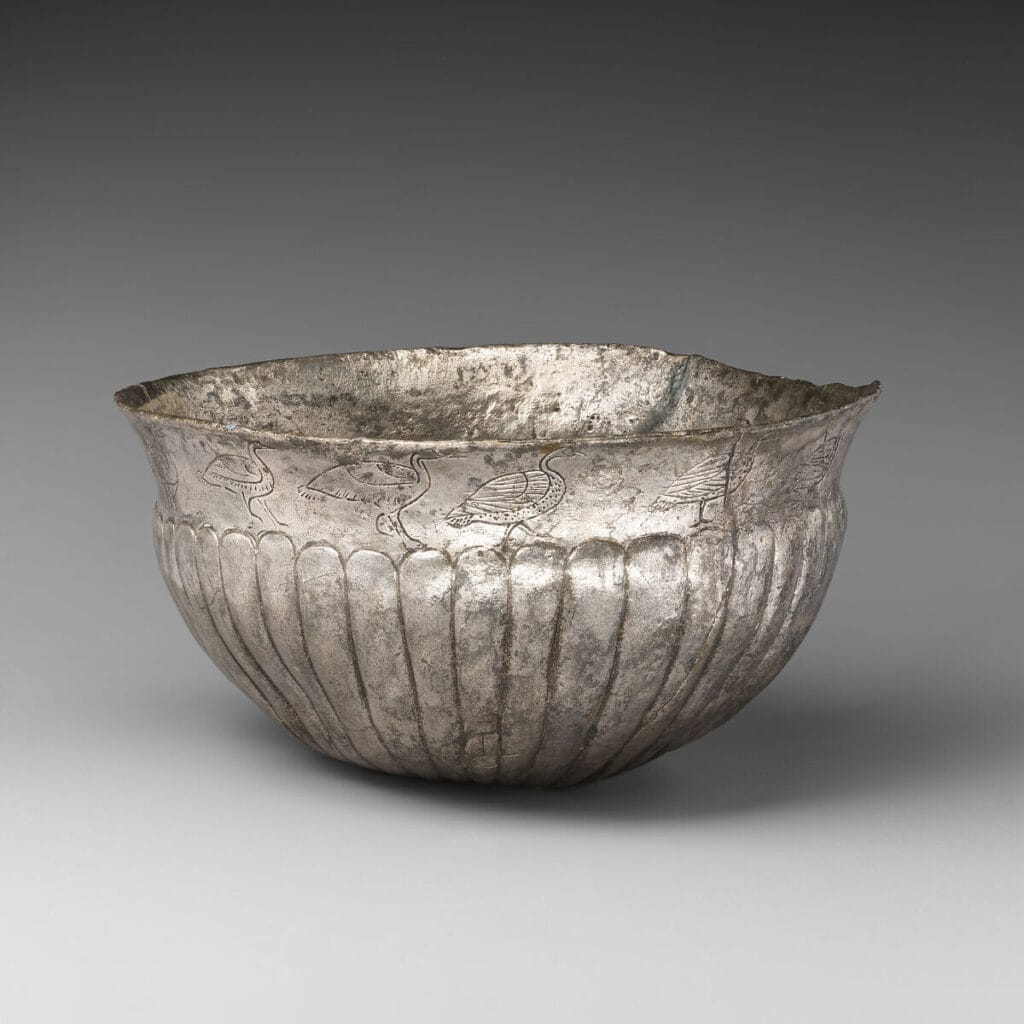
Sooner or later, someone hands me a pendant, or a piece of silverware, that has gone grey, then brown, then nearly black, and asks the question with real worry in it: is it ruined? The short answer is no. The long answer is worth knowing, because the dark layer that frightens
people is one of the least harmful things that can happen to a piece of silver — while the remedy most people reach for is one of the most harmful.
Tarnish is not dirt, and it is not the metal rotting. It is a new compound formed at the surface: silver sulfide, created when silver meets sulfur-bearing gases in ordinary air. Hydrogen sulfide is the usual one, present in traces almost everywhere. On sterling silver there is a second ingredient, because sterling is not pure silver: the copper in the alloy forms its own sulfide in the same film. That is why sterling tarnishes faster than pure silver does. The copper that makes sterling hard enough to wear is also what makes it darken sooner.
The film announces its own thickness. A very thin layer reads yellow. Then it goes red-brown, then blue, and only past roughly a hundred nanometres does it settle into the full black that alarms people. Those colours are thin-film interference, the same play of light you see on an oil slick, and conservators can read the film’s thickness from them the way you would read a gauge. Even at its blackest, the layer is about a tenth of a micrometre thick — hundreds of times thinner than a human hair. What looks like a piece swallowed by darkness is a piece wearing a coat of almost nothing.
Underneath that coat, the metal is whole. The Canadian Conservation Institute, which looks after the country’s museum silver, describes the tarnish layer as dense, compact and adherent — in conservation language, a stable surface. It even slows its own growth: silver tarnishes faster when freshly polished than when it is already filmed, because the layer gets in the way of the sulfur trying to reach the metal below. The Winterthur Museum’s advice to its own collectors says it without hedging: tarnish is not damaging, and a piece does not need to be polished before it is put away. The black proves nothing else, either. A silver-plated piece tarnishes exactly like a solid one, because its surface is silver too — so tarnish is no certificate of quality. And a piece that darkens quickly is not poor sterling. Quick darkening is simply what sterling does.
The Remedy That Harms
What consumes a piece of silver is not the film. It is the film’s repeated removal. Every polishing takes a certain amount of the underlying silver away along with the tarnish — the conservation notes state it as a plain matter of course — and polishing compounds work because they are abrasives, which leave a pattern of fine scratches behind even when the surface looks bright again. Paid once in a while, that cost is fair. Paid monthly for thirty years, it is how engraving softens, edges round off, and hallmarks fade; it is why conservators no longer polish silver as a routine, and only clean it when there is a reason. Chemical dips are not an escape from the trade. They dissolve tarnish faster than they dissolve metal, but left on too long they can pit the surface, they strip the dark out of the recesses that gave a design its depth, and they must never be used on a piece with a sealed hollow inside it, where the liquid can get in and cannot be washed out again.
The Corrosion That Does Deserve Worry
There is a corrosion of silver that deserves the worry people give to tarnish, and it comes from chlorides, not from sulfur. At home, the route is usually a fingerprint: the salt on skin reacts with silver to form silver chloride, which darkens in the light and can leave a print marked into a polished surface for good. In harsher conditions — buried pieces, marine finds — the same chloride chemistry produces what conservators call horn silver, and unlike the sulfide film it does not protect the metal at all; left alone, it can go on converting a piece until little metal remains. Two different blacks, two different problems. The sulfide film sits on the surface and slows to a stop. The chloride keeps eating.
At the Bench, Tarnish Is a Tool
At the bench, meanwhile, the sulfide chemistry is not an enemy at all. It is a tool. The dark finish sold as “oxidized” silver is not an oxide, and it is not grime: a bath of liver of sulfur lays down silver and copper sulfides on purpose, settled into the recesses where a design wants its shadow. It is tarnish, placed where the maker wants it, and no deeper than the tarnish that arrives on its own. Scrubbing the black off a piece finished that way does not clean it. It removes the finish.
Care, Mostly Restraint
The care that follows from all of this is mostly restraint. Wear the piece: at the bench, the darkest arrivals are usually the ones that live in drawers, while a pendant worn against clothing keeps wiping its film away about as fast as the film can form. Store silver dry, sealed in a bag or wrapped in acid-free tissue, and keep it away from rubber bands, wool and latex gloves, which all give off the gases that feed tarnish. Anti-tarnish cloths and strips earn their keep by catching those gases before the silver does. And when the film does build past what you enjoy looking at, clean it then — gently, with a polishing cloth, and no oftener than the look requires. The black itself was never the damage. It was only ever a message about the air the piece has been living in.
— Tom