The Gem-A Conference ran in London on November 7 and 8, and its programme was built around research: presentations on stones whose names carry precise technical meanings, and on what happens when those meanings are tested against new material. Two of the headline addresses turned on the same discipline — a name in gemmology is a definition, and a stone either meets it or it does not.
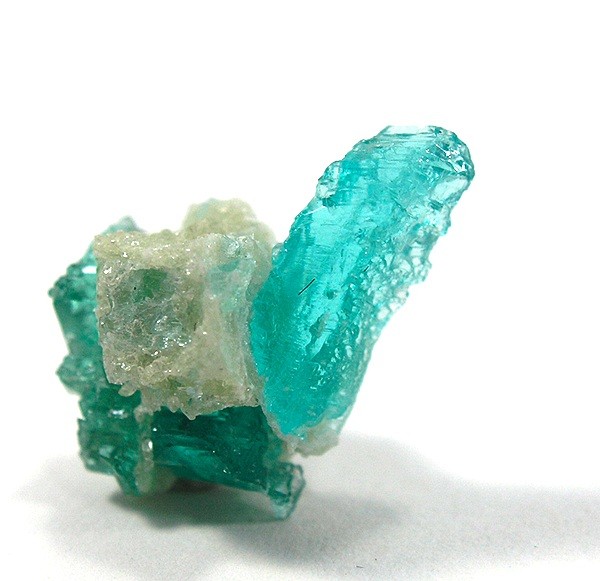
A Fourth Source for Paraíba
The first concerned Paraíba tourmaline from a new source. Dr. Klaus Schollenbruch, a senior gemmologist at the Gübelin Gem Lab, analysed some of the first identified Ethiopian Paraíba tourmalines, looking at the variety of colours among the sample stones and at the mining activity in the Abullo region in the southwest of Ethiopia. The presentation followed work published earlier this year: on August 27, GIA and the Gübelin Gem Lab announced, each having examined the material independently, that copper-bearing tourmaline from a new Ethiopian deposit meets the accepted definition of Paraíba tourmaline, and GIA said it can now state Ethiopia as an origin on its tourmaline reports. Before Ethiopia, the recognised sources were Brazil, Nigeria and Mozambique. Ethiopia is the fourth.
That a stone mined in Ethiopia can carry a name taken from a Brazilian state is not a loophole; it is the definition working as written. Under the definition shared by the major laboratories, a Paraíba tourmaline is a blue, bluish green to greenish blue, green or yellowish green tourmaline, of medium-light to high saturation, coloured mainly by copper and manganese — of whatever geographical origin. The name states a chemistry and a colour. The origin is a separate fact, stated separately on a report. The Ethiopian material runs from blue to bluish green, with violet and purple present in some rough and pronounced colour zoning in many stones, which is why the laboratory work mattered: the question was never what the stones looked like at a glance, but whether their chemistry placed them inside the definition.
Type IIa at Letšeng
The second research theme was a classification of the same kind, applied to diamond. Other presentations focused on the relatively high numbers of Type IIa diamonds uncovered at the Letšeng mine in Lesotho. Type IIa is a chemical category: these are diamonds with no measurable nitrogen or boron, the most chemically pure form of the stone. At most mines they are rare — GIA puts them at about 2 percent of production elsewhere. At Letšeng, roughly a quarter of the mine’s production is Type IIa, a proportion GIA describes as unmatched in its consistency. The category is not a grade and not a promise of beauty; it is a statement about what is, and is not, inside the crystal — and at Letšeng that statement holds for an unusual share of everything the mine produces.
Sapphire, in the Market
A more topical address showed what happens in the market when categories blur. Nivoda, the online trading platform, identified sapphires as increasing their lead in the platform’s coloured gemstone sales, crediting sapphire’s hardness and its wide variety of colours — and suggested that confusion in the diamond markets over natural and synthetic stones may have contributed to the higher sapphire sales. The programme also ranged beyond new research, with an address on the key historical British jewellery designers of the Arts and Crafts movement.
Read together, the two research stories make one point from opposite directions. Paraíba began as a place name and survives as a chemical definition, so a fourth source can join it without changing what the word means. Type IIa names an absence — nitrogen that is not there — and one mine in Lesotho produces that absence at a rate no other mine matches. In both cases the word on the report is exact, provided it is read for what it actually says.
— Tom