Geneva’s autumn jewellery sales ended this week with colour at the top of both major rooms, and with both headline stones selling inside their estimates rather than above them. At Christie’s, a 24.00-carat pink diamond unseen in public for more than seventy years led the Magnificent Jewels sale. A day earlier at Phillips, a 16.40-carat Kashmir sapphire led a smaller sale. Neither result broke its range. Together they show where the strongest Geneva bidding still concentrates: in large, well-documented coloured stones with a named origin or a named maker.
The Christie’s stone, sold on 10 November, is known as the Bulgari Pink. It is an emerald-cut diamond of 24.00 carats, graded Fancy Intense Pink, VVS2 clarity, and classed as Type IIa — the chemically purest category, which Christie’s notes covers fewer than 2 per cent of gem-quality diamonds. The GIA report is from 2024. The rough is believed to have come from the Golconda mines in India, and the stone was mounted by Bulgari in the 1950s; it then remained in the same European noble family for more than seventy years, appearing at auction for the first time. It sold for CHF 12.1 million (about C$20.6 million), inside its pre-sale estimate of CHF 10–15 million. Christie’s did not disclose the buyer.
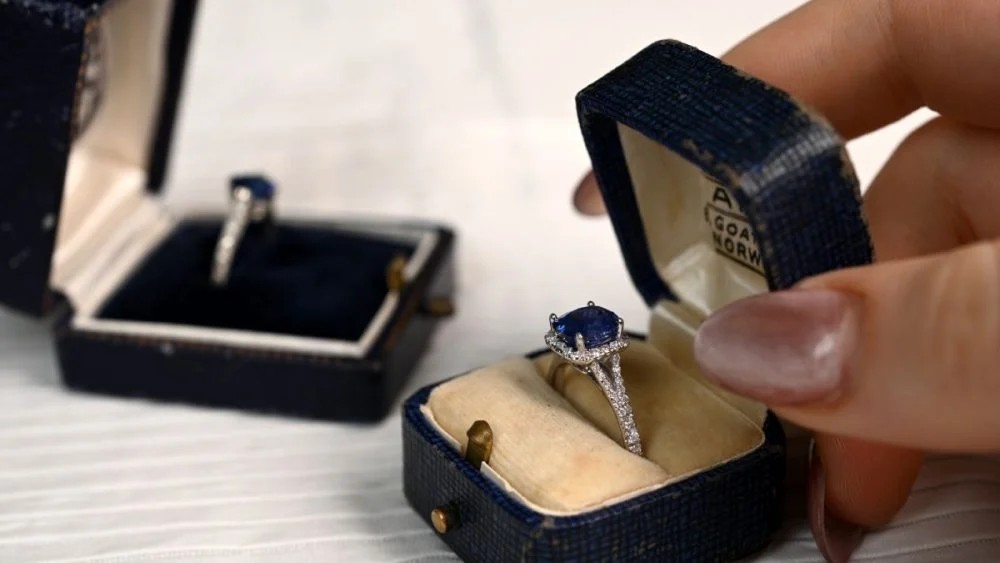
The Phillips result, from the Geneva Jewels Auction VII held on 9 November and reported on 10 November, was led by a ring centred on a cushion-shaped Kashmir sapphire of 16.40 carats, set between baguette-diamond shoulders. The sapphire is unheated, with reports from both SSEF and Gübelin stating Kashmir origin and no indications of heating. It sold for CHF 1.9 million, within its estimate. The sale as a whole made CHF 8.1 million, with 91 lots sold — 73 per cent of those offered.
Read together, the two sales make a narrower point than their totals suggest. In both rooms the leading stone was coloured, natural, and accompanied by the kind of documentation a buyer can check: a laboratory report naming origin and treatment for the Kashmir sapphire, a GIA report and a Type IIa classification for the pink diamond. In both rooms the price landed inside the house’s own estimate, which is what a held estimate looks like in practice — the rooms valued these stones highly before the sale, and the bidding confirmed the valuation without overturning it.
That is also the limit of what these results say. No total for the Christie’s sale is given here: the reporting this article rests on established the headline lot and its price, not a verified sale total. The Phillips figures are complete for that one auction, not for the Geneva season. What is established is the order at the top of each room, the identity and documentation of the two leading stones, and their prices against their estimates. On those facts, Geneva’s autumn belonged to colour — a pink diamond that had waited seventy years to be sold, and a blue sapphire whose origin and lack of heating were stated by two laboratories.
— Tom