On 11 November in Geneva, Sotheby’s High Jewelry sale took CHF 32.6 million in total (about C$56 million). The top price of the day was CHF 4.5 million, and it was not paid for a jewel. It was paid for a stone: an unmounted diamond of 8.63 carats, oval modified brilliant-cut, fancy intense pink, VS2 clarity, type IIa. It sold toward the higher end of its estimate of CHF 3.3 million to 5 million, with no setting, no maker’s name and no piece of jewellery around it yet.
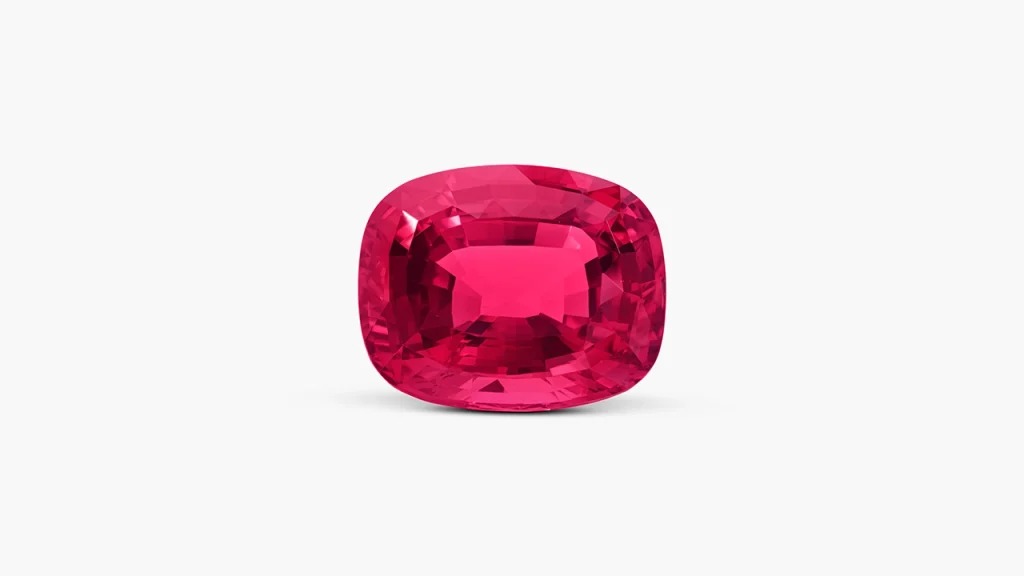
The result the estimates missed by the widest margin was also unmounted. A cushion-shaped spinel of 51.79 carats, from Tanzania, offered loose, had been estimated at CHF 350,000 to 500,000. It sold for CHF 1.7 million. Spinel spent centuries misidentified — the red stones in old crown jewels were routinely called rubies, and some of the most famous “rubies” in royal collections are spinels — but there was no confusion in this room about what the stone was. The buyers were bidding on size, colour and rarity in a single loose stone, and they bid roughly four times what the catalogue had asked them to expect.
The pattern held through the rest of the top prices. An unmounted cushion modified brilliant-cut diamond of 8.11 carats, fancy pink, VVS1, sold for CHF 1.6 million. An unmounted marquise-shaped diamond of 3.40 carats, fancy intense green, VS2, sold for CHF 921,600. Four of the ten highest prices in the sale were paid for stones with no mount at all. Colour, rather than carat weight alone, ran through the list: a ring set with a step-cut Ceylon sapphire of 28.46 carats sold for CHF 1.2 million against an estimate of CHF 260,000 to 420,000, and the sale’s top ten is made up almost entirely of coloured diamonds and coloured stones.
Finished pieces beat their estimates too, but by smaller multiples at lower prices. A Cartier Art Deco tutti frutti brooch, gem-set with diamonds, sold for CHF 128,000, and a Boucheron diamond tiara estimated at CHF 35,000 to 50,000 sold for CHF 166,400. Those are made objects, carrying a house name and a period. They still did not approach the prices of the loose stones above them.
Read from a bench, a loose stone is not a jewel. It is a decision that has only been half taken. The cutting is finished — the shape, the proportions and the polish are fixed, and they were fixed by someone the buyer will never know — but everything that makes the stone wearable remains undone: the metal, the mount, the way it will sit and catch light on a hand or at a throat. The buyer of the pink diamond or the spinel has not bought a finished thing. They have bought the one part of a future jewel that cannot be commissioned twice.
That ordering is normal at a workbench, where a setting is designed around a stone and not the reverse. What Geneva showed, at an unusual scale, is that the market prices the two parts the same way. A mount can be drawn, made, unmade and remade by any competent bench. A natural pink diamond of 8.63 carats, or a Tanzanian spinel of 51.79 carats with that saturation, cannot be ordered again once it is gone. On 11 November, the room paid finished-jewel prices for beginnings, and left the making for later.
— Tom