Tiffany & Co. and the Council of Fashion Designers of America (CFDA) have named the five finalists for the second Tiffany & Co. x CFDA Jewelry Designer Award: Angelo Jones, Aaron Mak, Christine Olowonira, Haley Kim and Ivi Kyratzi. The announcement, made in a Tiffany statement of 10 November, opens the second cycle of a programme built around a simple structure: the finalists do not compete on drawings. They compete on pieces they make.
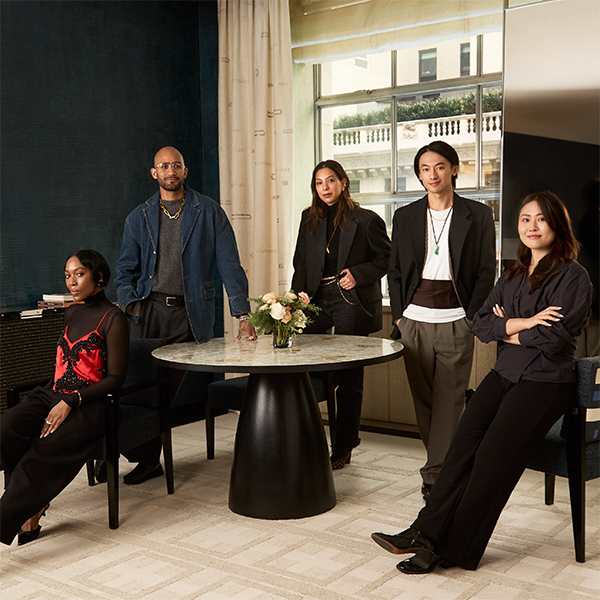
Each finalist will take part in a design challenge inspired by Tiffany’s archival and iconic creations, working through mentorship and an immersive learning experience with the house’s design team. Each will produce a capsule collection of three to five pieces in metal, and the collections will be presented to the selection committee at an award ceremony at The Landmark, Tiffany’s Fifth Avenue flagship. One finalist will receive a grant of US$50,000 (about C$70,000) and a one-year fellowship on the Tiffany & Co. design team. The recipient will be announced in spring 2027.
The five arrive by different roads, and the range is part of the point. Angelo Jones, based in New York, founded KRSN, a label for handcrafted unisex jewellery, after graduating from Parsons School of Design in 2017. Aaron Mak comes from womenswear and footwear design, with roles at Gabriela Hearst and Thom Browne among others, and a Parsons graduation in 2020. Christine Olowonira founded Cocoerow, a fine jewellery brand known for sculptural pieces and limited editions, after working in ateliers including Valentino, Celine and Loewe. Haley Kim works in computer-aided design — most recently as a CAD designer at Effy Jewelry — and holds a Master of Fine Arts from the School of Visual Arts, completed in 2025. Ivi Kyratzi, a native of Cyprus, is founder and creative director of Ivi Los Angeles, and was a Fashion Trust U.S. 2026 Award finalist.
Read from a bench, what is being tested here is translation. An archive piece gives each designer the same starting material — the house’s own history of forms — and the challenge is what each hand does with it in metal, at real scale, in three to five finished pieces. Handcraft, fashion design and CAD are three different ways of arriving at an object; a capsule collection is where those routes have to produce jewellery that can be held, worn and judged as jewellery, not as renderings or intentions.
The programme’s first cycle shows what the fellowship means in practice. Its recipient, Jameel Mohammed, founder of the jewellery label Khiry, has recently completed his year on the Tiffany design team, and sat on the selection committee that chose these five finalists. The second cycle also adds a separate student award: a US$25,000 scholarship and a summer internship in the design department for one jewellery design student.
The US$50,000 grant is the headline figure, but it is not the whole prize. A year inside a house design team is time at other people’s benches, with mentors, archives and production standards that a small independent workshop does not have. Money can be spent in a season. That kind of access is harder to buy at any price — which is presumably why five established designers are willing to be judged, in metal, for the chance at it.
— Tom